top of page

NEWS

Stay up to date with news, information and updates.

Search

We are so pleased to announce the Keep Australia Beautiful Victoria, 2026 Tidy Towns and Cities Sustainability Awards Winners! After another difficult year of deliberations from our amazing judges, we have a whole suite of worthy winners from across Victoria.


We are so proud of the amazing people that work so hard to Keep Victoria Beautiful, and look after the people and places that make our communities so special.


Click through to read more about the winners and stay tuned for more stories, insights and chats with our 2026 winners in the months to come!


2026 Tidy Town Winner - Mornington Peninsula Shire


2026 Tidy Cities Winner - City of Maribyrnong


2026 Heritage and Culture - City Winner - Asylum Seeker Resource Centre - City of Maribyrnong


2026 - Social Wellbeing - Cities Winner - Australia's Most Accessible Beach - Frankston City Council


We'd like to congratulate our 2026 Tidy Towns and Cities Sustainability awards finalists. Out of many fabulous entries from all across the State these finalists will go into our judging process, meeting with judges to determine the winner in each category, across the Tidy Town and Tidy City streams.


To be a part of Victoria's biggest night in sustainability and community, join us at Rydges Melbourne on 30th September to meet the finalists and winners - and find out which Town and City will take out the overall Tidy Town and Tidy City Awards.


Stay tuned to our newsletter, blog and social media to learn more about our wonderful finalists and the work they are doing!


 Finalist

Category

 Project Name

Location

Indigo Regen

Behaviour Change Campaigns and Education

Indigo Regen Cool Seat Project

Indigo Shire Council

Behaviour Change Campaigns and Education

St Joseph's Nature Play Group

Mornington Peninsula Shire Council

Frankston City Council

Behaviour Change Campaigns and Education

Creative Circularity:Embedding Sustainability through Arts, Culture and Community Action in Frankston City

Frankston City Council

Behaviour Change Campaigns and Education

FEAST: Food Education and Sustainability Training

Port Phillip City Council

Behaviour Change Campaigns and Education

Living with Purpose Education Program

Hume City Council,Macedon Ranges Shire Council,Melbourne City Council,Port Phillip City Council,Whittlesea City Council

Behaviour Change Campaigns and Education

Volunteering Gippsland – Youth Volunteering and Leadership Community Development Program

South Gippsland Shire Council

ACCIONA -Community

Reuse and renewal Kyabram

Campaspe Shire Council

Indigo Shire Council & Tourism North East - Beechworth Railway Precinct

ACCIONA -Community

Beechworth Railway Precinct

Indigo Shire Council

ACCIONA -Community

The Chinese Stroke Support Group (援豐會): Empowering Migrant Health, Recovery, and Social Inclusion in Victoria

Whitehorse City Council

ACCIONA -Community

Refugee Leadership Program

Maribyrnong City Council

ACCIONA -Community

Sunbury Edible Garden Trail 2026

Hume City Council

ACCIONA -Community

Spring Ditch 2026

Indigo Shire Council

Indigo Power

Energy

Beechworth Community Battery (BEECH01)

Indigo Shire Council

Energy

Home Energy Doctor

Baw Baw Shire Council

Environment

City of Yarra – Clifton Hill tree-growth project

Yarra City Council

Environment

Save The Moonah Woodlands Project

Mornington Peninsula Shire Council

Environment

The Briars Eastern Dwarf Galaxias Recovery Project

Mornington Peninsula Shire Council

Environment

Seaford Banksia Arboretum Project

Frankston City Council

Environment

The Sea is our Best Friend - Mangrove Regeneration

Mornington Peninsula Shire Council

Environment

Melbourne Tree Ledger

Bayside City Council, Casey City Council, Frankston City Council, Glen Eira City Council, Greater Dandenong City Council, Kingston City Council, Knox City Council, Monash City Council

Heritage and Culture

Dig into Beechworth -  Ching Ming commemoration and National Trust Australia Heritage Festival 2026

Indigo Shire Council

Heritage and Culture

Cyril Young Memorial Chapel Restoration

Mornington Peninsula Shire Council

Heritage and Culture

McCrae Homestead Roof restoration

Mornington Peninsula Shire Council

Heritage and Culture

ASRC Member Recipes Project

Maribyrnong City Council

Indigenous Culture

Spotlight on untold local Indigenous history

Indigo Shire Council

Ngawak Biik Briars Junior Rangers Program

Indigenous Culture

Ngawak Biik Briars Junior Rangers Program

Mornington Peninsula Shire Council

Indigenous Culture

Our Place Our Story: 20 Years of Native Title, Culture and Country

Hindmarsh Shire Council

Indigo Shire Waste Services

Litter

Soft Plastics Collection System

Indigo Shire Council

Litter

Zero Plastics Australia

Ballarat City Council

Litter

Rochester Lions Container Deposit Scheme

Campaspe Shire Council

Litter

See it Bin It - Leopold

Greater Geelong City Council

Community Work & Partnerships Program, North West Metropolitan Region of the Department of Justice and Community Safety

Litter

CCS Litter Work Teams – Brimbank and Banyule City Councils

Banyule City Council,Brimbank City Council

Litter

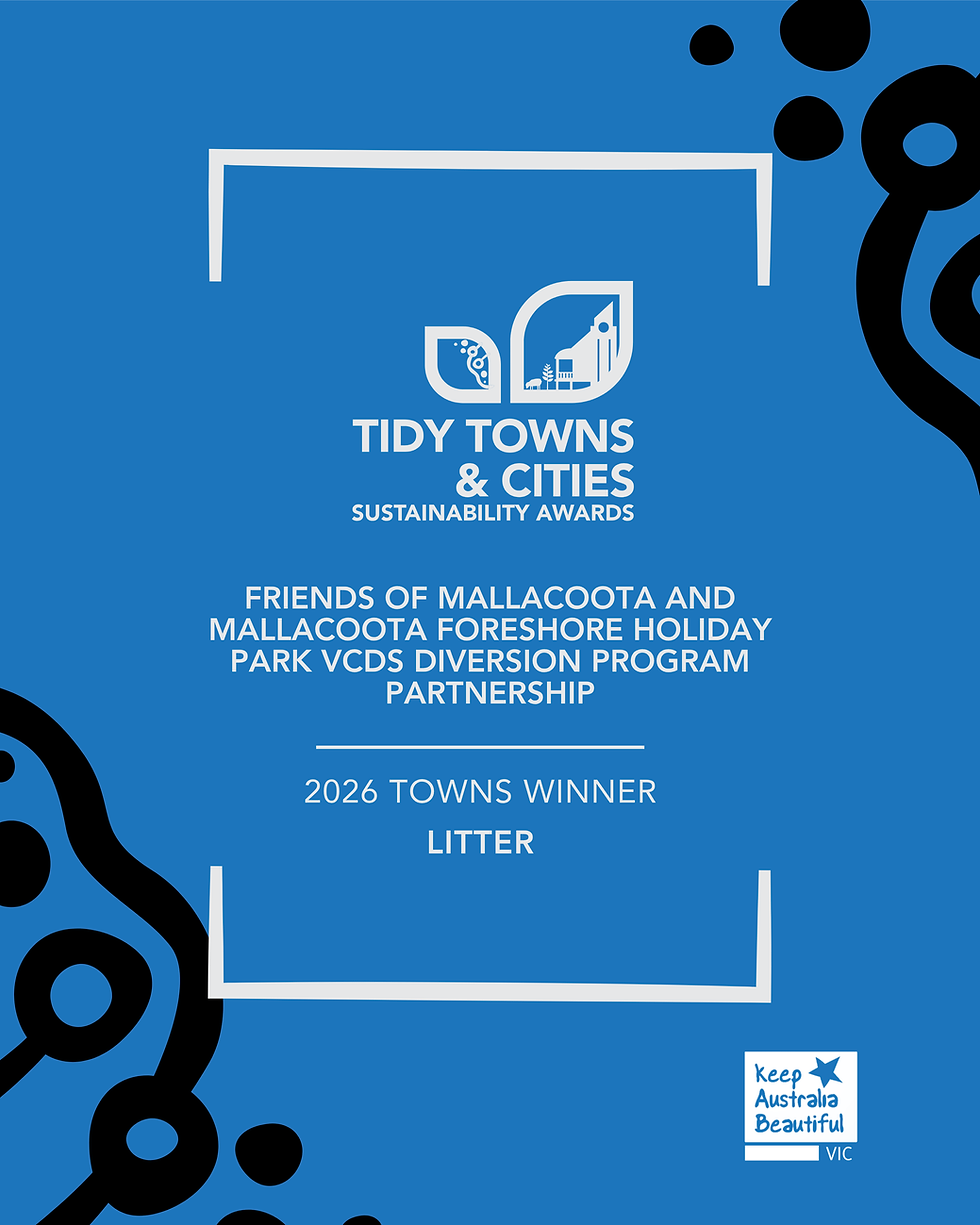
Friends of Mallacoota and Mallacoota Foreshore Holiday park VCDS diversion program partnership

East Gippsland Shire Council

Social Well-Being

"What Women Can Do"

Indigo Shire Council

Social Well-Being

The Ranch 2.0 Crisis Accomodation Service

Mornington Peninsula Shire Council

Social Well-Being

Australia's Most Accessible Beach

Frankston City Council

Social Well-Being

Out Loud on the Ninch event with the You & I Exhibition

Mornington Peninsula Shire Council

Social Well-Being

Empowering Multicultural Communities: A Decade of Health, Wellness, and Leadership Mentorship

Whitehorse City Council

Social Well-Being

ASRC Member Recipes Project

Maribyrnong City Council

EPA Waste Prevention and Reduction

Hand in Hand for the Coast

Mornington Peninsula Shire Council

EPA Waste Prevention and Reduction

Sustainability and Social Power in Warehouse Processing

Maribyrnong City Council

EPA Waste Prevention and Reduction

Quercus Beechworth Repair Cafe'

Indigo Shire Council

EPA Waste Prevention and Reduction

LoopLab Yarra

Yarra City Council

EPA Waste Prevention and Reduction

The Fabric ReStore

Banyule City Council

EPA Waste Prevention and Reduction

Wash Against Waste trailer

Mornington Peninsula Shire Council

Amy Schilling

Young Legend

Volunteer Projects + Civic, & Diplomacy Leadership

Indigo Shire Council

Young Legend

Volunteering Gippsland - Youth Volunteering & Leadership Community Development Program

South Gippsland Shire Council

Young Legend

St Joseph's PriMARY School - Mangrove Warriors

Mornington Peninsula Shire Council


Malcolm Legg: the ecologist who turned knowledge into action


This year's Dame Phyllis Frost Winner is the inimitable Malcolm Legg.


Some people study nature. Others work to protect it. Malcolm Legg has spent decades doing both – and in the process has changed how the Mornington Peninsula understands, values and cares for its native wildlife.


An ecologist and long-time Landcare volunteer, Malcolm is this year's winner of the Dame Phyllis Frost Award. His work spans ecological research, threatened species conservation, invasive species management, habitat restoration and community education. Based around Rosebud but active in every corner of the Peninsula, he has built a body of work that land managers, councils and community groups still rely on today.


More than 500 surveys, one lasting resource

Malcolm's starting point has always been evidence. Habitat loss, invasive species and human impacts are the biggest threats to Australia's native plants and animals, and he knew that reversing decline depends on first understanding what is there – and what is missing.

So he went looking. Over the years Malcolm has completed more than 500 fauna surveys across the Mornington Peninsula and surrounding regions. From that work he created the Mornington Peninsula Wildlife Atlas, a comprehensive record of local species that has since been incorporated into the Shire's online Biodiversity Atlas.

The atlas is far more than a list. It has given local government, Parks Victoria and Commonwealth land managers the data they need to make evidence-based decisions, prioritise conservation actions and protect critical habitat. His ecological assessments have guided management across multiple land tenures, from Parks Victoria reserves to Commonwealth sites such as HMAS Cerberus.


Finding the bandicoots

Some of Malcolm's most important contributions have come from finding wildlife others had missed.

In 2008 he discovered breeding populations of the endangered Southern Brown Bandicoot on Quail Island. He went on to identify six additional breeding populations along the northern Western Port coastline. These discoveries significantly expanded what was known about the species' distribution and shaped conservation priorities and long-term management for one of the region's most vulnerable mammals.


Mapping the kangaroos

Between 2007 and 2011, Malcolm carried out extensive ground-based surveys of Eastern Grey Kangaroos across the Peninsula. Working on foot across diverse habitat types, he mapped where kangaroos were present and where they were absent, producing one of the most comprehensive local datasets available at the time.

His findings overturned a common assumption. Kangaroos were not spread evenly across the Peninsula. Instead, they were concentrated in specific habitat corridors – particularly an arc running from Bushrangers Bay through Greens Bush and Arthurs Seat (Wonga) to the Devilbend (Daangean) area.

That work became an important local reference point. It has been used as a comparison in later assessments and has highlighted the limits of relying solely on broad-scale modelling. On-ground ecology, Malcolm showed, still matters.


Taking on feral predators

Knowing where native animals live is only half the job. Protecting them means tackling the threats.

As part of the Western Port Ramsar Protection Program, Malcolm conducted extensive fauna surveys that helped establish ongoing feral animal control programs and monitoring of threatened wildlife. Through Southwest Mornington Peninsula Landcare, he has volunteered on fox control in high-quality bushland at Merricks North and across the Boneo, Rosebud and Main Ridge area for the Greens Bush to Arthurs Seat Biolink. He has also contributed to feral animal management across the wider Gippsland Plain bioregion.

The payoff is real. These programs support vulnerable ground-dwelling wildlife, including bandicoots, the Growling Grass Frog and the Agile Antechinus.


Restoring what was lost

If surveys are Malcolm's foundation, restoration is his passion. He has long championed the removal of invasive environmental weeds such as boneseed, bluebell creeper, pittosporum and wild pine – and proven that degraded land can return to healthy indigenous bushland.

For Malcolm, restoration has never been just about pulling weeds. It is about rebuilding whole, resilient ecosystems that native wildlife has evolved to depend on. He has worked hard to change perceptions, showing landholders and land managers that indigenous vegetation supports far greater biodiversity than introduced landscapes.

Two Landcare projects show this in practice. Through the London Bridge Grassy Bowl Restoration Project, Malcolm has helped restore endangered Calcareous Swale Grassland on the Southern Peninsula. At Fingal, he has worked to restore Moonah Woodland, another endangered ecological vegetation class.


What sets Malcolm apart is not only the depth of his science, but his ability to share it. Those who nominated him describe him as "the missing link between research and action".

His unparalleled knowledge of species distribution and habitat condition lets him see not just what is present, but what is missing and what an ecosystem needs to recover. Crucially, he can explain that to anyone – a landholder, a volunteer, a council officer or a decision-maker.

As a founding and active member of the Southwest Mornington Peninsula Landcare group, Malcolm has given countless presentations, mentored volunteers and offered practical conservation advice to Landcare and Friends groups, councils, committees of management and community organisations. His clear, passionate communication has inspired people to value native landscapes and to act to protect them. His work has contributed to the conservation of many Peninsula species, including koalas, bandicoots and antechinus.

He is also tenacious. His advocacy for removing invasive species and re-establishing native vegetation is driven by scientific evidence and a clear vision of what a healthy landscape should look like – and it has been a driving force behind protecting the Peninsula's much-loved fauna.


Lessons from a lifetime in the field

Malcolm's career offers clear lessons for anyone working in conservation.

Good decisions need good data. Accurate information on species, habitat condition and ecological processes allows land managers to set priorities, protect critical habitat and measure whether restoration is working.

Restoration works best at the scale of whole ecosystems. Controlling invasive species, re-establishing indigenous vegetation and protecting habitat connectivity together create landscapes that can recover on their own.

Lasting change is a shared effort. The best outcomes come when landholders, volunteers, government agencies and environmental groups pool their knowledge and work towards common goals.

And above all, patience and persistence pay off. Ecological recovery takes time. With informed management and sustained commitment, degraded landscapes can heal and threatened species can be given a fighting chance.


A legacy that will keep growing

Malcolm set out to leave healthier ecosystems, better-informed communities and a stronger foundation for biodiversity conservation than existed when he began. By any measure, he has done it.

His legacy lives in the Wildlife Atlas and the data that continues to guide planning. It lives in restored grasslands and woodlands, in protected bandicoot populations and in feral control programs that keep running. It lives in the restoration mindset he has helped embed – the confidence that damaged land can be brought back.

Most of all, it lives in people. Through decades of education and collaboration, Malcolm has built a network of people who understand, value and actively protect native ecosystems. That cultural shift will keep benefiting biodiversity on the Peninsula for generations.


Congratulations, Malcolm – a richly deserved recognition of a lifetime spent caring for land, wildlife and community.


Stay up to date with news and events - subscribe to our newsletter below.

KABVIC_logo copy.jpg
registered-charity-acnc.png
  • Instagram
  • Facebook
  • LinkedIn
bottom of page